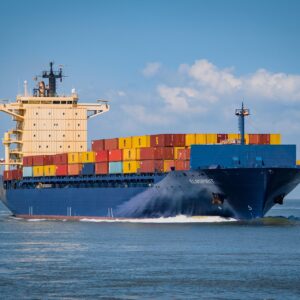
Global trade often looks much simpler on a purchase order than it does in practice. A company buys goods from a supplier in Asia, North America or another part of Europe, agrees on a price and sets an expected delivery date. Between the supplier’s warehouse and the buyer’s door, however, the cargo may pass through several carriers, terminals, ports and customs procedures. International freight forwarding brings these separate stages together and helps businesses manage the movement of goods as one connected transport process. https://www.arijus.lt/en/services/international-freight-forwarding-services
International freight forwarding becomes particularly valuable when a shipment cannot be handled by a single carrier from beginning to end. A container may leave a factory by truck, continue by vessel, enter a port terminal thousands of kilometres away and then complete the journey by road or rail. Each stage has its own schedule and operational requirements. If one connection changes, the rest of the plan may need to change with it.
Door-to-door shipping involves more than one journey
The phrase “door-to-door” sounds straightforward. Cargo is collected at one address and delivered to another. What happens between those two doors can be considerably more complicated.
Consider a European importer purchasing machinery from a factory located inland in China. The cargo first needs to reach a Chinese port. After export formalities and terminal handling, it is loaded onto a vessel and transported to Europe. Once discharged, it may need customs clearance before a truck can collect it for final delivery.
The ocean voyage is only one part of the shipment. Collection at origin, terminal operations, documentation, customs coordination and final transport all have to happen in the correct sequence. A delay at any one of these points can affect the delivery date.
This is why freight forwarding is fundamentally a coordination business. The forwarder does not necessarily own the ship, aircraft or truck carrying the goods. Its role is to arrange transport capacity and connect the companies that physically move the cargo.
Incoterms can change who is responsible for transport
Before requesting freight quotations, businesses should understand the delivery terms agreed with their supplier. Incoterms define important responsibilities between buyer and seller, and those responsibilities can directly influence which parts of the logistics chain still need to be arranged.
A buyer purchasing under one set of terms may be responsible for organising transportation almost from the supplier’s premises. Under another arrangement, the seller may handle a larger part of the journey. Problems arise when the commercial team assumes that “freight included” means the same thing in every contract.
It does not.
A quotation that appears more expensive may actually include significantly more of the transport chain. Another may cover only the main international leg, leaving local collection, destination charges or final delivery outside the quoted amount. For that reason, freight prices should be compared on an equivalent scope rather than by looking at one prominent figure.
The shortest route is not always the best route
On a map, choosing a transport route appears easy: find the shortest connection between origin and destination. Actual freight networks do not work quite like that. Departure frequency, available capacity, transshipment points and inland connections can matter just as much as geographical distance.
A direct service may offer fewer handling stages but operate less frequently. Another route could involve a transshipment yet provide more departure options. Depending on the shipment, waiting several days for a direct departure may make less sense than using a slightly longer route that leaves immediately.
Price also changes the calculation. For low-value stock that is not urgently required, a slower route can be perfectly reasonable. For a production component or a product required for a fixed launch date, reliability may be worth more than a small freight saving.
Experienced logistics teams therefore tend to ask a broader question than “What is the cheapest rate?” They want to know how often the service operates, how long it normally takes and what alternatives exist if the original plan fails.
Consolidation gives smaller shipments access to global freight networks
Not every importer fills an entire shipping container or truck. Many companies purchase quantities that occupy only a few pallets, particularly when testing a new supplier or introducing a new product.
Consolidated freight allows several shipments to share transport capacity. In sea freight this is commonly associated with LCL shipments, while road networks regularly combine smaller loads moving in similar directions. The model can make international transport economically viable without waiting until enough stock has accumulated for a full load.
There is a trade-off. Consolidated cargo usually passes through additional handling points because individual shipments have to be grouped and later separated. This can add time and create more operational stages compared with a dedicated container or truck.
As volumes grow, the economics can shift. A business that previously shipped several smaller consignments each month may eventually find that consolidating its own purchasing into larger shipments reduces the cost per unit. Freight forwarding decisions therefore change as the business itself grows.
Documentation can stop cargo even when transport is running perfectly
A vessel can arrive on time and the container can be physically ready for collection, yet the goods may still not be ready to continue their journey. International transport depends heavily on documentation.
Commercial invoices, packing information and transport documents need to match the actual shipment. Customs procedures may require additional product information, depending on the goods and trade route. If discrepancies are discovered only after arrival, the importer can lose valuable time obtaining corrections from a supplier in another time zone.
This is especially common with first-time imports. The buyer is focused on the product itself, while the supplier may use generic descriptions or documentation formats that are sufficient for its own internal processes but not necessarily ideal for the destination procedures.
Regular importers usually become much stricter about documents after experiencing one problematic shipment. Checking information before departure is considerably easier than solving the same issue while cargo is already waiting at a terminal.
Demurrage and detention can turn waiting time into a cost
Some of the most frustrating freight expenses are not related to moving cargo at all. They arise when containers or equipment remain in use longer than the agreed free period.
Terms such as demurrage and detention become very real when a container cannot be collected, unloaded or returned on time. The precise charging structures and conditions vary, but the practical lesson for importers is simple: containers cannot remain indefinitely at terminals or outside the carrier’s network without financial consequences.
Several things can cause this situation. Customs documentation may not be ready, a warehouse may not have space to receive the cargo, the delivery appointment may be missed or inland transport may not have been arranged in time.
A shipment can therefore cross an ocean without problems and still generate unexpected costs during its final few kilometres. Good planning after arrival is just as important as booking the main freight leg.
Warehouse capacity should be part of freight planning
Transport teams sometimes concentrate so heavily on getting cargo to its destination that they overlook a basic question: can the destination actually receive it?
This becomes important when several containers arrive within a short period. A warehouse that normally receives one or two trucks a day may suddenly need to unload considerably more. If there are limited loading bays, staff or storage locations, transport appointments start to accumulate.
Seasonal imports make this particularly visible. Retailers often build inventory before Christmas, summer or other major selling periods. Several large orders may have been placed weeks apart but arrive at the destination port at almost the same time because of changes in sailing schedules.
The freight forwarder and warehouse therefore benefit from sharing information early. Knowing that five containers are expected next week is far more useful than receiving five separate requests for urgent delivery once they have already arrived.
Tracking does not eliminate delays
Modern logistics platforms provide more visibility than businesses had in the past. Shipment milestones, estimated arrivals and transport documents can often be accessed online, giving purchasing and logistics teams a clearer view of cargo in transit.
Visibility is useful, but it should not be confused with control. Watching a delayed vessel move across a tracking screen does not make it sail faster. What tracking does provide is time to react.
If an important shipment is expected several days later than planned, a company may adjust production, inform customers or move a small quantity of replacement stock by a faster method. Without timely information, those decisions happen later.
This is one reason communication remains important even as freight forwarding becomes more digital. Software can show that something changed. A useful logistics partner should also help explain what the change means for the shipment.
Social media has made some supply chains far less predictable
Retail demand used to be heavily influenced by advertising campaigns, seasonal patterns and historical sales. Those factors still matter, but online trends have added another variable. A product can suddenly gain attention on TikTok, Instagram or another platform and generate several weeks of normal sales in a few days.
From the outside, this looks like a marketing success. Inside the supply chain, it can create an immediate inventory problem.
If the next container is already at sea, there may be no practical way to accelerate it. The company then has to decide whether to wait, send part of a new order by air or accept that the product will temporarily sell out. Each option has a cost.
The opposite mistake is just as common. Businesses sometimes see a product trending, order heavily and receive the shipment after consumer attention has moved elsewhere. Freight arrived successfully, but the commercial assumption behind the shipment was wrong.
International logistics cannot solve unpredictable demand, but flexible transport planning can reduce some of its consequences.
A good forwarder becomes more valuable when something goes wrong
When every shipment follows the original schedule, freight forwarding can look almost transactional. The company requests a rate, accepts the offer and receives updates until the cargo arrives. The differences between service providers become more obvious when the normal plan stops working.
A vessel may omit a port, a flight may have insufficient capacity or a shipment may miss a planned connection. A forwarder cannot guarantee that these events will never happen. What matters is how quickly the issue is identified and whether realistic alternatives are presented.
Communication is especially important here. A short message explaining that cargo is delayed is useful, but businesses often need more: the revised arrival estimate, the reason for the change and the available options.
For regular importers, this operational reliability can eventually matter more than small differences between individual freight quotations. A slightly cheaper shipment provides little benefit if every exception requires several days of emails to understand what happened.
Landed cost gives a better picture than freight cost alone
Businesses importing goods for resale ultimately care about the cost of getting each product into inventory. The international freight rate is only one part of that calculation.
Origin transport, main carriage, destination handling, customs-related expenses, insurance where applicable, inland delivery and other logistics charges can all contribute to landed cost. Depending on the goods and transaction, duties and taxes may also need to be considered separately.
This broader calculation can influence purchasing decisions. A supplier offering a lower factory price may be located in a region with less convenient transport connections. Another supplier may charge more for the product but provide shorter lead times and lower logistics costs.
Looking at landed cost helps prevent the purchasing department from saving money on the product while the logistics department spends the difference getting it home.
Freight forwarding works best when it starts before the cargo is ready
One of the simplest improvements a company can make is to involve logistics earlier. Waiting until the supplier sends a message saying “cargo ready tomorrow” leaves fewer options, particularly during busy periods.
If the forwarder knows the expected volume, origin, destination and approximate cargo-ready date beforehand, transport alternatives can be evaluated earlier. The importer can also check documentation, warehouse capacity and customs requirements before the shipment begins moving.
This does not require complicated supply-chain technology. For many businesses, a basic forecast of upcoming shipments already makes a significant difference.
Effective international freight forwarding is ultimately less about finding a truck, vessel or aircraft at the last minute and more about connecting the individual stages of international trade into a predictable process. There will always be schedule changes, capacity problems and unexpected delays. The businesses that handle them best are usually those that know where their cargo is going, who is responsible for each stage and what they will do when the original route no longer works.